Floor sanding.
Years of scratches, worn patches and tired varnish, gone in a few days. Sanding takes your floor back to clean timber, ready for a new finish.
Coarse. Fine.
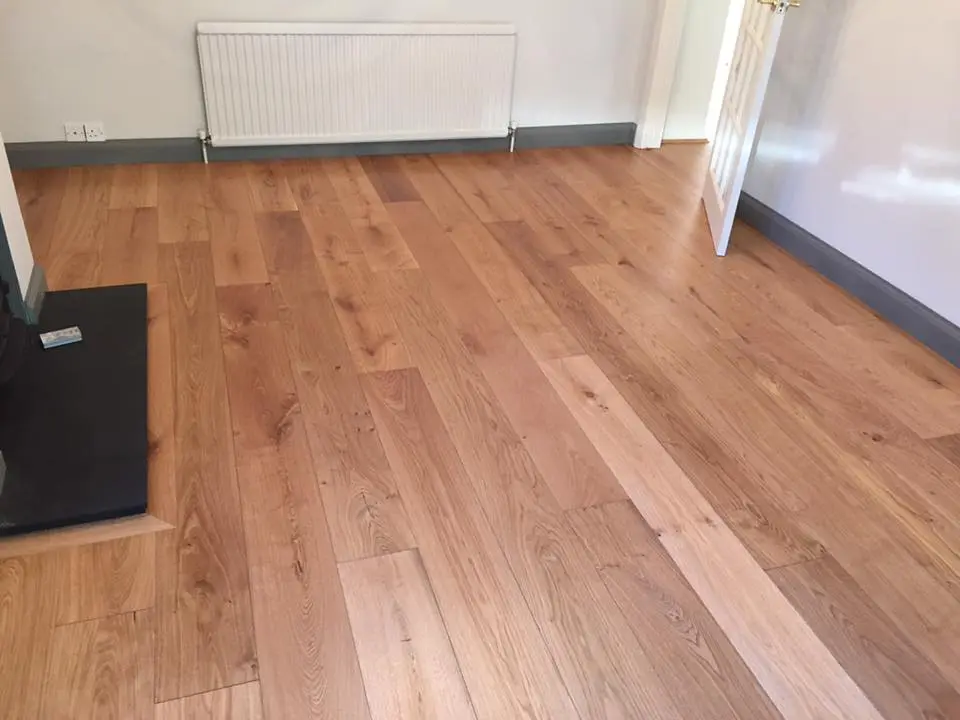
Finished.
We start with a coarse grit on a drum sanding machine to take off the old finish and level the boards. Then we work down through finer grits until the surface is smooth. An edging machine gets right up to the skirting, and we scrape by hand in the corners the machines can't reach.
Before the final pass, we fill any small gaps between the boards with a filler made from the floor's own dust, so it's the same colour as the wood. Then we vacuum the whole floor and apply the finish you've chosen, a hardwax oil or a lacquer.
On a floor in reasonable condition we sand around 30 square metres a day. A floor in bad condition is slower, around 15 to 20.
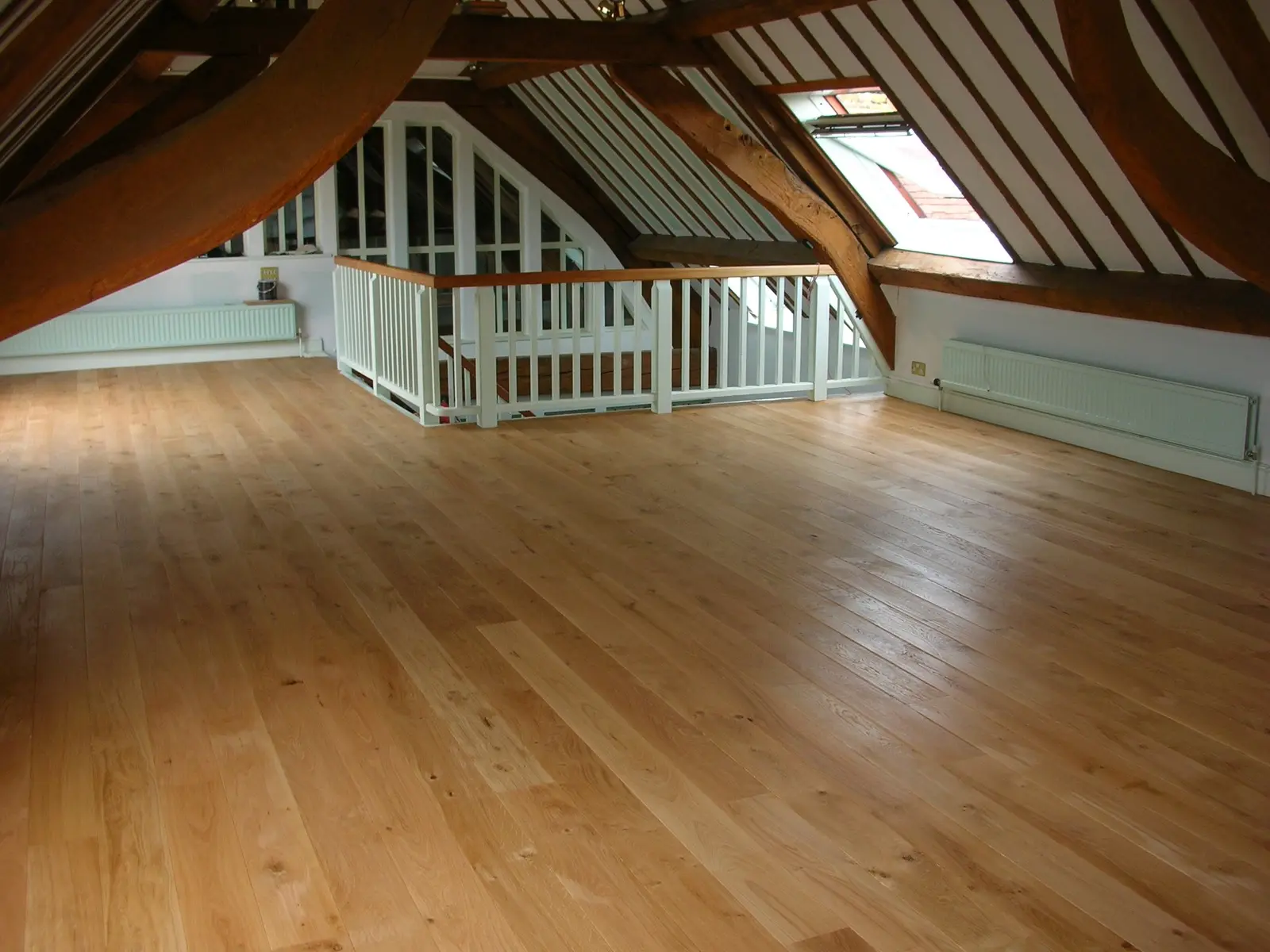
If it's wood,
we'll sand it.
Most real wood floors can be sanded. These are the ones we see most. If yours isn't listed, just ask.
- Oak and other hardwood floorboards
- Pine and other softwood floorboards
- Victorian and Edwardian boards
- Parquet, herringbone and chevron
- Engineered wood floors
- Staircases and landings
- Floors found under old carpet
- Floors that have been painted
What it costs.
These are the rates our instant quote works from today, for sanding and finishing. Oil and lacquer cost the same.
Floors
- Hardwood floorboards: £28 per m²
- Softwood floorboards: £30 per m²
- Parquet: £35 per m²
Extras
- Stairs: £35 per stair
- Taking up and disposing of old carpet: £4 per m²
If it only needs a refresh
If the finish is worn but the wood underneath is sound, you may not need a full sand. A buff and recoat costs £16 per m². Have a look at our maintenance service.
Getting a price for your floor
Our instant quote works out an estimate from your answers in under two minutes. It's valid for 30 days, and we'll confirm the final price after a site visit, once we've seen the floor.
Good to know.
A few things people ask us about before we sand their floor.
Dust
Sanding makes some dust, and there's no way to get rid of it completely. We keep it down with dust sheets, which stop it spreading through the house, and sanding machines with dust catchers.
Clearing the room
The floor needs to be clear of furniture and belongings. If that isn't possible, we can sand in stages, moving things from one side to the other. That takes longer and may cost more.
Decorating
If you're painting the room, do it before we sand, but leave the last coat on the skirting boards until afterwards. Sanding right up to the edges will scuff them.
Stains and black marks
Most marks come out with the old finish, but not all of them. Black marks from water or pet urine can go deep into the timber. If they don't sand out, the boards can be repaired or replaced.
Engineered floors
An engineered floor has a top layer of real wood over a plywood base. It can be sanded as long as that top layer is thick enough. We check before we start.
How often a floor can be sanded
Each sand takes off around a millimetre or less, so a solid wood floor can be sanded many times over its life. Keeping on top of the finish with regular maintenance means it won't need sanding as often.
Drying times
Water based lacquers usually dry in 4 to 6 hours. After the final coat, wait at least 4 hours before you walk on the floor and at least 24 hours before you move furniture back. Oil finishes take longer, usually 6 to 12 hours.
Questions, answered.
Quick answers to common questions about sanding.
All frequently asked questionsHow long will a restoration take?
It depends on the size of the job, the condition of the floor and the finish you choose. As a rough guide, not counting the time to apply the finish, we work through:
- around 30 square metres a day on a floor in reasonably good condition
- around 15 to 20 square metres a day on a floor in bad condition
Softwood floors generally take longer than hardwood floors, because of their higher sap and wax content.
How much dust will there be?
Restoring a floor will generate some dust, and there's no way to eliminate it completely. We limit it by using dust sheets to stop it spreading through the premises, and sanding equipment with dust catchers.
Can an engineered wood floor be sanded?
Usually, yes. An engineered floor has a top layer of real wood over a plywood base, and it can be sanded as long as that top layer is thick enough. Some thinner ones can only be sanded once, or not at all.
We check the thickness before we start. If you still have the packaging or the product name, that helps.
Do I need to move out while my floor is sanded?
Not usually. You won't be able to use the rooms we're working in, and there will be some noise and dust, but most people carry on in the rest of the house.
Once the finish is on, keep the rooms well ventilated and give it time to dry before you walk on it. We'll tell you how long for the finish you've chosen.
Which is better, oil or lacquer?
It depends on how much traffic the floor will get and the look and feel you're after.
An oil finish leaves the wood looking and feeling more natural, but wears through quicker and needs a little more maintenance. A lacquer finish is more durable, but won't look as natural. With the right primer under the lacquer, you can get a slightly more natural look.
Team up with Spartan Flooring
We take tremendous pride in the quality of work we deliver, and we're always looking to build relationships with domestic and commercial clients.
Prefer to talk? Call 07790 884 985